
What is Demand-Side Response (DSR)?
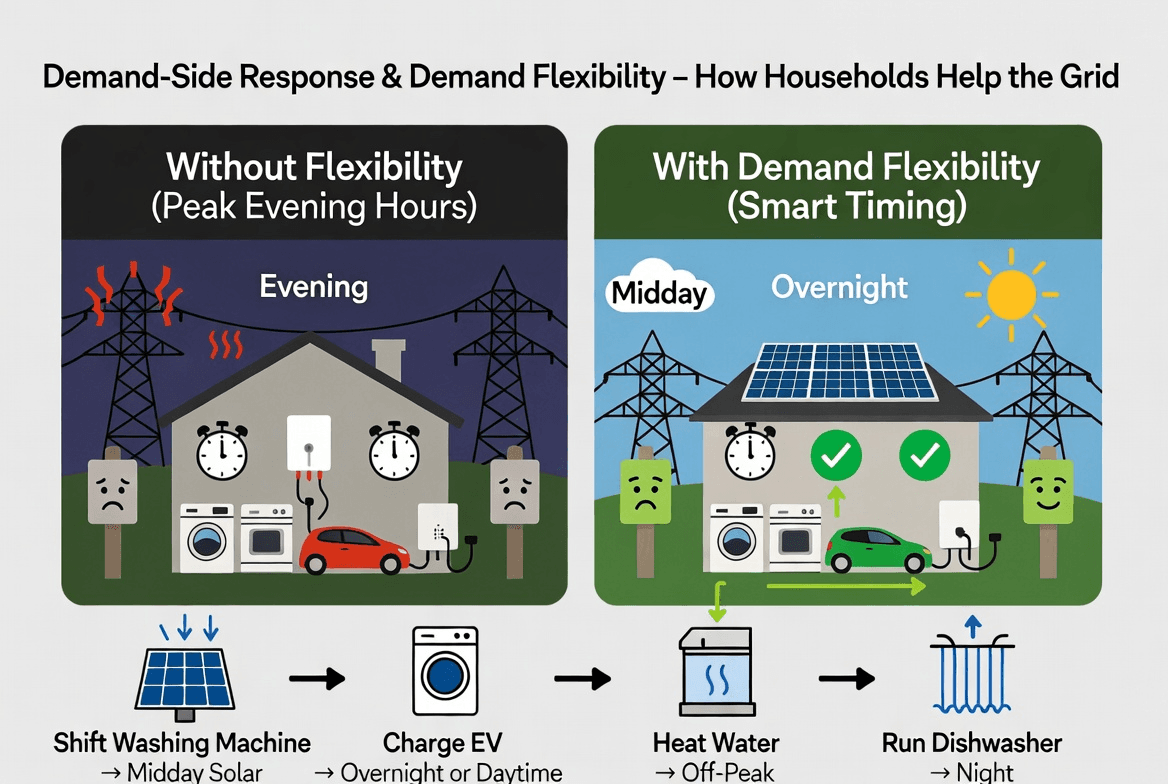
Demand-side response (DSR) is the practice of using electricity at times when it is most readily available, rather than changing how much electricity you use. By shifting flexible activities to periods of lower demand or higher renewable energy generation, consumers can help balance the electricity system.
For example, instead of running your washing machine during the evening peak, you could run it in the afternoon when solar energy production is high. Small changes like these can make a meaningful difference when adopted by many households.
What is Demand Flexibility?
Demand flexibility is the ability to adjust electricity use without affecting your daily routine or overall energy consumption. Many household activities are flexible and can be scheduled for a different time, including:
- Charging an electric vehicle (EV)
- Running a washing machine or dishwasher
- Heating water
- Operating pool pumps or other non-essential appliances
By shifting these activities away from peak demand periods, you help create a more balanced and efficient electricity system.
Why is Demand Flexibility Important?
As more renewable energy sources, such as solar and wind, are connected to the grid, electricity generation varies throughout the day. Demand flexibility helps match electricity use with periods when renewable energy is most available.
When many consumers shift their electricity use, the benefits include:
- Improved grid stability by reducing pressure during periods of high demand.
- Greater use of renewable energy, making better use of electricity generated from solar and wind.
- Lower reliance on expensive backup power plants, which helps reduce system costs.
- Potential savings for consumers, particularly where time-based electricity tariffs are available.
- A cleaner, more sustainable energy system.
Even small changes made by individual households can have a significant impact when adopted across an entire community.
How This Works with Net Metering and Energy-Saving Tools
Net metering allows households with solar panels to generate and export electricity, while energy-saving tools help reduce overall electricity consumption. Demand flexibility complements these measures by encouraging consumers to use electricity when renewable energy is plentiful or demand on the grid is lower.
Together, these approaches help households:
- Reduce electricity costs.
- Make better use of renewable energy.
- Contribute to a more reliable and resilient electricity grid.
- Support a cleaner energy future.
Simple Ways You Can Help
| Instead of… | Try… | Why it helps |
|---|---|---|
| Running the washing machine during the evening peak | Run it during the middle of the day if solar energy is available | Makes better use of renewable energy and reduces peak demand |
| Charging your EV immediately after arriving home | Charge overnight or during midday when renewable generation is high | Helps balance electricity demand and reduces pressure on the grid |
| Heating water during busy evening hours | Use a timer to heat water during off-peak periods | Reduces demand when the electricity system is under the most strain |
| Running the dishwasher after dinner | Schedule it to run later at night or during the day | Helps spread electricity demand more evenly throughout the day |
Every Household Can Make a Difference
You don’t need to use less electricity to support the grid — you simply need to be flexible about when you use it. By making small changes to the timing of everyday activities, households can help improve grid reliability, make better use of renewable energy, lower system costs, and contribute to a cleaner, more sustainable energy future.
Resources
- Driivz. What is Demand Side Response (DSR)? driivz.com
- World Economic Forum. Energy flexibility and demand response. weforum.org
- GridX. What is demand side response and why is it important? gridx.ai
- National Grid ESO (UK). Demand Side Flexibility programs. neso.energy
- A consumer-centered explanation from the UK, where this is already happening: Smart energy — flexible energy and low-carbon technology adoption, Which? (UK).