The electricity grid is the network of power plants, transmission lines, substations, and distribution lines that delivers electricity from where it is generated to homes, businesses, schools, hospitals, and industries. In Pakistan, the grid connects electricity producers with consumers through Distribution Companies (DISCOs) such as IESCO, LESCO, FESCO, MEPCO, GEPCO, HESCO, PESCO, QESCO, TESCO, SEPCO, and K-Electric.
Traditionally, electricity flowed in one direction — from power plants to consumers. Today, with the growth of rooftop solar and other Distributed Energy Resources (DERs), consumers can also generate electricity and, where permitted under NEPRA regulations, export surplus electricity back to the grid through net metering.
Why is the Electricity Grid Important for Consumers?
The electricity grid plays a vital role in making clean energy more reliable, affordable, and practical for households and businesses.
Reliable Electricity Supply — Solar panels only produce electricity when sunlight is available. During cloudy weather, rainy days, or at night, the electricity grid supplies power to your home, ensuring you continue to have electricity when your solar generation is low.
Export Excess Solar Energy — If your rooftop solar system produces more electricity than you are using, and you have an approved net metering connection, the excess electricity can be exported to the grid. This allows consumers to receive credits for the electricity supplied, in accordance with NEPRA’s applicable regulations.
Greater Energy Resilience — By combining rooftop solar with the electricity grid, consumers have access to multiple sources of electricity. This improves energy resilience by reducing dependence on a single source of power and helping households manage variations in solar generation.
Better Use of Clean Energy — The grid enables surplus renewable electricity generated by one consumer to be used elsewhere in the electricity system, supporting more efficient use of clean energy resources.
Supporting Pakistan’s Energy Transition — As more consumers install rooftop solar, batteries, and electric vehicles, the electricity grid becomes an essential platform for integrating these distributed energy resources safely and efficiently. A modern grid helps improve system flexibility, supports renewable energy integration, and contributes to a cleaner and more sustainable energy future. The World Bank has approved US$375.9 million for Pakistan’s Grid Stability Enhancement Project (first phase of the BEST-PAK program) to strengthen the national transmission network, install advanced equipment like STATCOMs, reduce outages, integrate additional wind and renewable capacity (including bringing 640 MW of curtailed wind energy online), and support climate-resilient infrastructure. Optimised grids also help protect consumers from energy price shocks caused by fossil fuel volatility. By enabling more renewable energy and consumer flexibility, grids reduce reliance on expensive imported fuels and lower overall system costs.
How Does the Grid Work with Rooftop Solar?
A typical on-grid solar system operates as follows:
- Solar panels generate electricity during the day.
- Your home uses solar electricity first.
- Any surplus electricity can be exported to the grid through an approved net metering connection.
- When solar production is insufficient (such as at night or during cloudy weather), electricity is supplied from the grid.
The result is a more reliable and efficient energy supply for the consumer.
How the On-Grid Solar System Works (Step-by-Step)
This diagram shows a typical on-grid (grid-tied) solar system — the most common setup used in Pakistan with net metering.
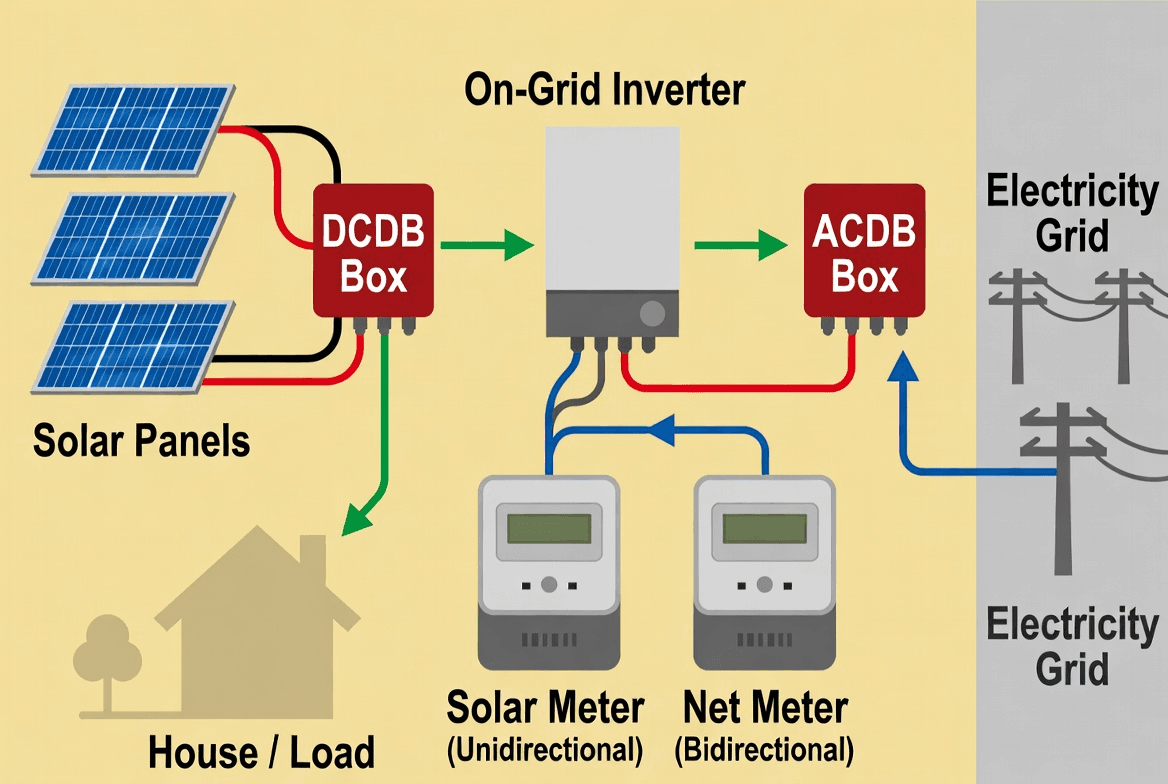
- Solar Panels — Sunlight hits the solar panels and generates Direct Current (DC) electricity.
- DCDB Box (Direct Current Distribution Box) — Acts as a safety and protection box. It collects the DC power from the panels and sends it safely to the inverter. It includes fuses and protection devices.
- On-Grid Inverter — The most important part. It converts the DC electricity from the solar panels into Alternating Current (AC) electricity that your home appliances and the national grid can use.
- ACDB Box (Alternating Current Distribution Box) — Another safety box that distributes the AC power coming from the inverter.
- Solar Meter (Unidirectional) — Measures how much electricity your solar panels are producing.
- Net Meter (Bidirectional) — This special meter records two things: how much electricity you import from the grid (when solar is not enough), and how much electricity you export to the grid (when your solar produces extra). At the end of the month, you only pay for the difference (net usage).
- House / Load — Your home appliances use solar power first (priority). Any extra power automatically goes to the grid.
- Electricity Grid — When your solar system is not producing enough (at night or on cloudy days), power flows smoothly from the national grid to your home.
Power Flow Summary:
- Daytime (Sunny) → Solar panels → Inverter → House (first priority) → Excess to Grid
- Night / Cloudy → Grid → House
- Everything happens automatically — you don’t need to switch anything manually.
Key Takeaway
This setup allows you to reduce your electricity bill significantly while staying connected to the reliable national grid.
Consumers are Becoming “Prosumers”
With rooftop solar and net metering, consumers are no longer only users of electricity — they can also become prosumers, meaning they both produce and consume electricity. This active participation supports Pakistan’s transition towards a cleaner, more flexible, and consumer-centred electricity system.
Why This Matters
The electricity grid is more than a network of wires — it is the connection that enables consumers to:
- Reduce electricity costs through rooftop solar.
- Access reliable electricity when solar generation is low.
- Export surplus electricity through net metering (subject to applicable regulations).
- Support the integration of renewable energy into Pakistan’s electricity system.
- Contribute to a cleaner, more resilient, and sustainable energy future.
- Gain protection from fossil-fuel price shocks through greater use of domestic clean energy and flexible resources.
References
- Ministry of Energy (Power Division): power.gov.pk
- National Electric Power Regulatory Authority (NEPRA): nepra.org.pk
- World Bank (2026). World Bank Support to Strengthen Pakistan’s Electricity Grid for Improved Reliability and Accelerated Clean Energy Growth. worldbank.org
- Green Grids Initiative (2026). Responding to Energy Price Shocks through Grid Optimisation: A ten-point plan to strengthen energy security and protect consumers. greengridsinitiative.net